
March
Spring or vernal equinox
Marks the start of spring in the northern hemisphere. In Mexico it is a festive date: many people dress in white and visit archaeological sites to "recharge" with the energy of the sun.
Twice a year, the setting sun draws a serpent of light on the steps of El Castillo. Thousands of people travel to Yucatan to watch Kukulcan, the feathered serpent, slide down the pyramid toward the earth. Here is when it happens, what you will see, and how to plan your visit.
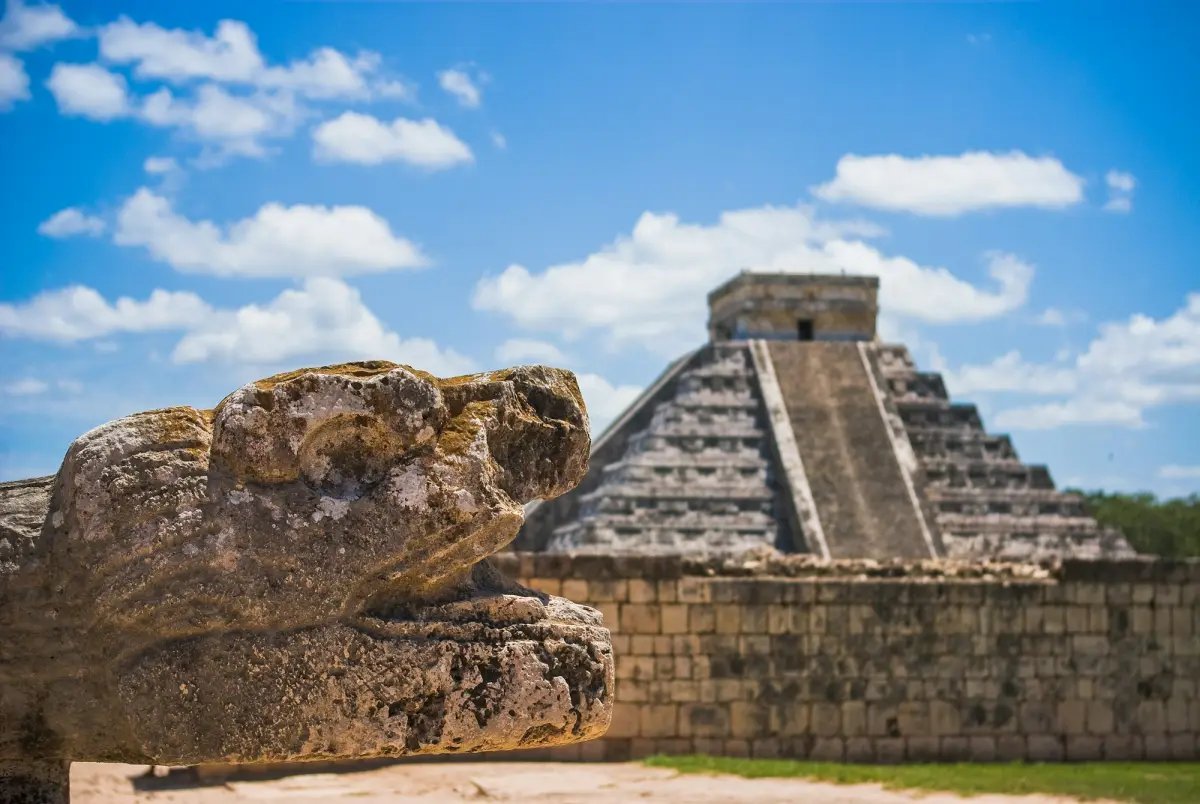
On equinox afternoons, the sun hits the Kukulcan pyramid's northwest corner at a low angle. The nine stepped platforms cast shadows on the west balustrade of the north staircase, and the light slipping between them forms seven triangles, one below the other.
As the sun goes down, the triangles appear from the top of the pyramid toward the base, where they meet a stone serpent head carved at the foot of the stairs. The result looks like a giant body of light crawling down the temple: the famous descent of Kukulcan, the most photographed moment of the year in Chichen Itza.
Kukulcan is the feathered serpent, a deity linked to wind, rain, and renewal, known as Quetzalcoatl in central Mexico. The pyramid that bears his name is the main building of the city and stands 30 m (98 ft) high, including the temple at the top.
Equal night
The word comes from the Latin for "equal night". On the two equinoxes of the year, the sun shines directly over the equator, and day and night last about 12 hours each almost everywhere on the planet.
March
Marks the start of spring in the northern hemisphere. In Mexico it is a festive date: many people dress in white and visit archaeological sites to "recharge" with the energy of the sun.
September
Opens fall in the north. At Chichen Itza the effect on the pyramid is practically the same, with a fraction of the visitors.
The vernal equinox is on Saturday, March 20, 2027. But the serpent doesn't appear only that day: according to an INAH study published in 2026, the seven triangles of light form every sunny afternoon from about March 15 to March 25.
These are the times INAH set for the 2026 equinox. The 2027 schedule is usually announced a few days before.
Yucatan is one hour behind Cancun, Playa del Carmen, and Tulum. The 4:00 pm shadow in Chichen Itza is 5:00 pm on your phone if it is still on Quintana Roo time.
In 2027, the autumn equinox falls on Thursday, September 23. The serpent of light returns to the north staircase with the same seven triangles, but without the spring crowds, which can reach tens of thousands of people in a single day.
The only catch is the weather. September is in the rainy season, and a cloudy afternoon is enough to hide the sun. If you can, plan a couple of days in the area to have more chances.
March 19 to 23
From 4:00 pm until sunset.
The busiest celebration of the year, with thousands of visitors on the Great Esplanade.
September 22 and 23
Also in the afternoon, from 4:00 pm.
Far fewer people. It is the rainy season, so clouds can hide the sun.
The great debate
It is one of the great debates around Chichen Itza. Some archaeologists see the snake shadow as a happy coincidence of the building's orientation; others believe the Maya, expert astronomers, used it on purpose.
A 2026 study by INAH and UNAM researchers proposes that the seven triangles may have helped the Maya locate the equinox, because an eighth triangle appears right after it.
Chichen Itza is the most famous place in the country to watch the equinox, but not the only one. If you want to compare experiences, these sites also have their own equinox traditions:

Our tours pick you up in Cancun, Playa del Carmen, or Tulum and include your ticket and a certified guide who explains El Castillo and the descent of Kukulcan. Ask us about equinox dates and how long you can stay at the site.
Book your tourFAQs
The spring equinox in 2027 falls on Saturday, March 20, and the fall equinox on Thursday, September 23. The serpent of light can be seen for several days around each date, so you don't have to be there on the exact day.
In the late afternoon. According to INAH, the best moment is roughly between 3:00 and 5:00 pm, Yucatan time, as the sun drops toward the horizon and the triangles of light form one by one on the staircase.
Yes. The seven triangles of light appear on the balustrade every sunny afternoon from about March 15 to 25, and again in a similar window around the September equinox. The days before and after are usually less crowded.
Yes, if you prefer fewer people. The light effect on the pyramid is the same, but September is in the rainy season, so clouds can hide the sun on some afternoons.
No. Climbing El Castillo has been forbidden since 2006, and that rule also applies during the equinox. You watch the phenomenon from the Great Platform, in front of the north staircase.
In Yucatan, the best-known alternative is Dzibilchaltun, near Merida, where the sun rises through the door of the Temple of the Seven Dolls. Teotihuacan, near Mexico City, also draws thousands of visitors every March.