
Chichen Itza History
The city of the water sorcerers
Founded by the Itza, Chichen Itza became the most powerful city in Yucatan, lived a rebirth with the arrival of the cult of Kukulkan, and, even after it was abandoned, never stopped being a sacred place. This is its story, from its founding to the jungle, and from the jungle to a World Heritage Site.
- Founded
- 5th to 6th century
- Golden age
- 900 to 1200 AD
- Abandoned
- Around 1250
- UNESCO World Heritage
- Since 1988

The origins of Chichen Itza
Chichen Itza is one of the most important archaeological sites on the Yucatan Peninsula. It was, and still is, a sacred city and a Maya pilgrimage center.
Its name tells the story: chi means mouth, chen means well, and the Itza were the group who settled here, the "water sorcerers". Maya chronicles date their arrival to around 435 AD; archaeology places the first large buildings a little later, from the 6th century.
The Maya before Chichen Itza
The Maya emerged about 3,000 years ago in what is now Guatemala, Honduras, Belize, and southern Mexico. In the middle of the jungle, a hard place to build cities, they reached remarkable heights. Between the 3rd and 10th centuries, the Classic Maya of the south built Tikal, Copan, Quirigua, Palenque and Piedras Negras, ruled by divine kings who fought each other for power.
Power moves north
In the mid-9th century, for reasons still not fully understood, those cities were abandoned. Their people scattered into small villages or moved north, and the center of power shifted to the Yucatan Peninsula. New cities rose there, many with features of central Mexican architecture. The most important was Chichen Itza, whose buildings recall those of Tula, more than 1,000 km to the west.
Chichen Itza timeline
Dating its history isn't easy: there are few written records, and the Maya calendar repeated the names of dates in each cycle. These are the stages most sources agree on, based largely on colonial-era Maya chronicles.
-
435 to 600
The city is founded
According to Maya chronicles, the Itza, a Maya group from Campeche or Tabasco, reached the area and built the first settlements around a cenote with fresh water.
-
600 to 918
The Puuc stage
The city's first golden age. The buildings of Old Chichen go up in the Puuc style. At the end of this period, the city is abandoned for the first time.
-
918 to 987
Toltec-influenced groups arrive
Settlers from Champoton, with ties to central Mexico and the Toltec culture, reach Chichen Itza and bring the cult of Kukulkan.
-
987 to 1194
The League of Mayapan
Uxmal, Mayapan, and Chichen Itza form a military alliance led by Chichen Itza. This is the city's peak.
-
1194 to 1200
Defeat by Mayapan
The cities of the league turn on each other. Chichen Itza is defeated, and Mayapan takes control.
-
Around 1250
The city is abandoned
Chichen Itza is left empty, but it remains a pilgrimage site until the 16th century.
Old Chichen, the Puuc city
Chichen Itza has two building styles, one for each era of the city. The older one dates from the Terminal Classic, between 600 and 900 AD, and belongs to the Puuc tradition, the most purely Maya style of the peninsula.
Old Chichen lies to the south, around the Xtoloc cenote. Its buildings are not as monumental as the ones raised later in the north, but they win you over with their beauty and rich decoration.
The first buildings
Small groups of farmers settled next to the cenote: there was water, land to farm, and plenty of stone to build with. The oldest known group of buildings is also the most charming: the Nunnery, named by the Spanish because it reminded them of a convent; the Church; and the East Annex, so decorated that there is no free space between its masks of Chaac, the rain god, with his curved nose.
The city grows
As the population grew, so did the buildings: the Ossuary, or High Priest's Grave, the House of the Deer, the platform of El Caracol, the Red House and the platforms nearby. Later came elements from central Mexico, such as the serpents on the cornices and the small ball court next to the Red House. All these groups were linked by a network of white roads, the sacbeob.


New Chichen, the Maya-Toltec golden age
After a first abandonment, new waves of Itza arrived around 900 AD, and the city went through a political and cultural rebirth with Toltec influence. It became the main center of power on the peninsula during the Early Postclassic, between 900 and 1200.
Kukulkan arrives from Tula
Much of this change is explained by events in Tula, in central Mexico. Around 987, a rival faction drove the ruler Topiltzin Quetzalcoatl and his followers out of the city. Maya sources say that around the same time, a man who called himself Kukulkan, the feathered serpent, arrived at Chichen Itza from the west (kukul, "feathered"; kan, "serpent").
Many historians believe they were the same person and that he brought Toltec beliefs and practices, including human sacrifice. The newcomers also took on many Maya beliefs, and from then on the image of Kukulkan appears again and again on the city's buildings.
The Great Platform
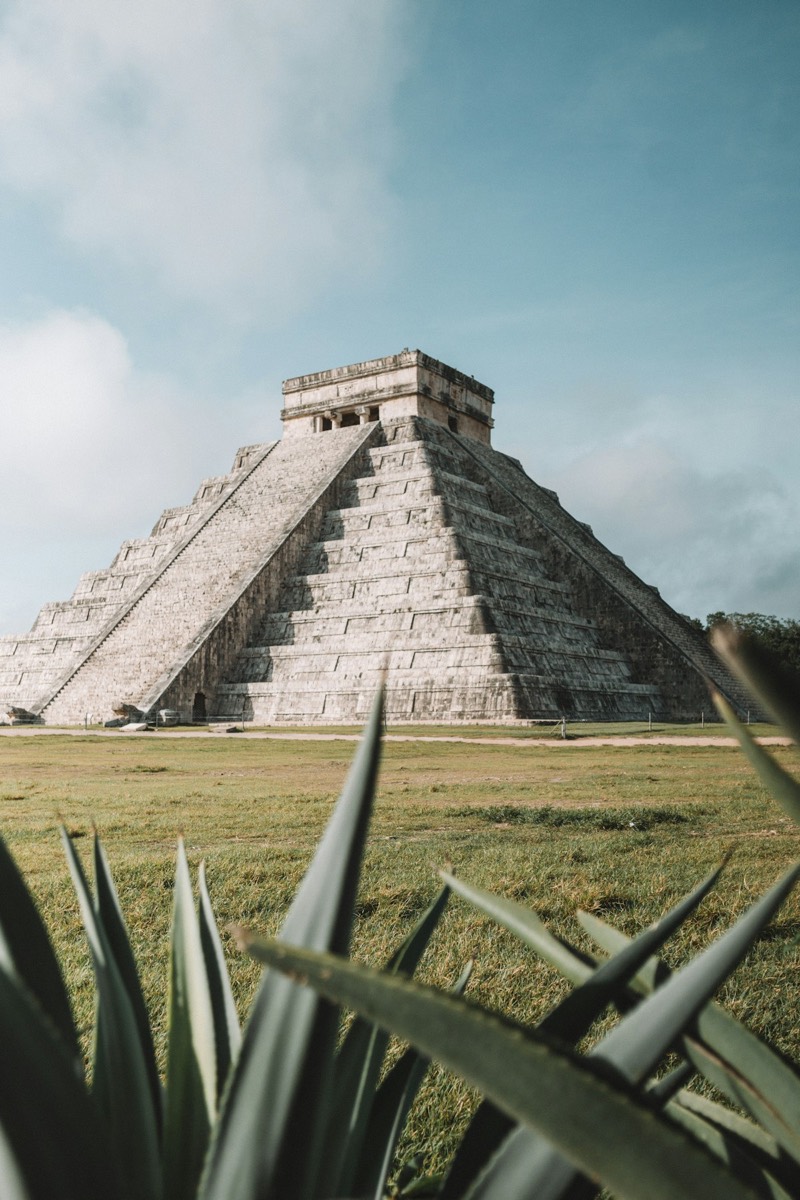
In the north rose the Pyramid of Kukulkan, which looks out over the great plaza toward the four directions of the universe. Around it came the Temple of the Warriors, the Temple of the Jaguars, and the Group of a Thousand Columns, which had a roof at the time. Also, the Tzompantli, the Venus Platform, and the Great Ball Court, the largest in Mesoamerica, full of references to the struggle between light and darkness. A white sacbe linked the plaza to the Sacred Cenote, where offerings were made for centuries.
Two styles in balance
El Caracol, from the Puuc stage, was remodeled in this period. Its forms, like those of many buildings in the city, show how the two styles lived side by side in a beautiful balance.
From central Mexico
- Porticoes with serpent-shaped columns
- Pillars carved with military scenes
- Sloped walls with panels (talud-tablero)
From the Puuc tradition
- Masks of Chaac on the facades
- Stone mosaics and stepped frets
- Friezes decorated with no empty space
Around 1150, another wave of Itza arrived and ruled the city for about 150 more years, until its rival, Mayapan, took over.

The League of Mayapan and the decline
In 987, the three most important cities in Yucatan, Uxmal, Mayapan, and Chichen Itza, formed the League of Mayapan. Chichen Itza led it in its first decades, but the alliance was never free of conflict.
The fall of the Itza
Over time, disputes among its leaders broke up the league and led to war. The Itza were hit hardest: after their defeat, they took refuge in the Peten, in northern Guatemala. Mayapan ruled the region until 1441, when it fell to a revolt led by the Xiu family of Uxmal.
The elite of Chichen Itza, made up of warriors, priests, and merchants, kept worshipping Kukulkan and caring for its buildings, but the city declined and was abandoned in the 13th century.
A sanctuary that was never forgotten
Even abandoned, Chichen Itza remained a sacred place for the Maya, above all because of its Sacred Cenote, where offerings and sacrifices were made for centuries.
When the Spanish reached Yucatan in the early 16th century, the Maya cities were already empty, and most people lived in the countryside. Yet Chichen Itza kept its sacred aura, so much that in 1532 the conquistador Francisco de Montejo the Younger set up a Spanish town in the ruins, called Ciudad Real. Maya resistance forced him to leave within a year or two.
The rediscovery of Chichen Itza
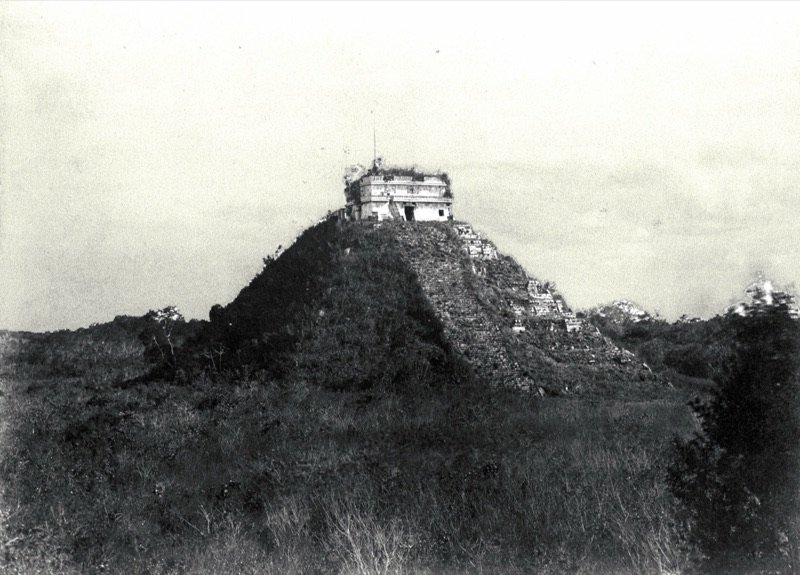
In the 19th century, travelers, artists, and photographers reached a city covered by the jungle. Their images are the first record of the ruins before any restoration.
-
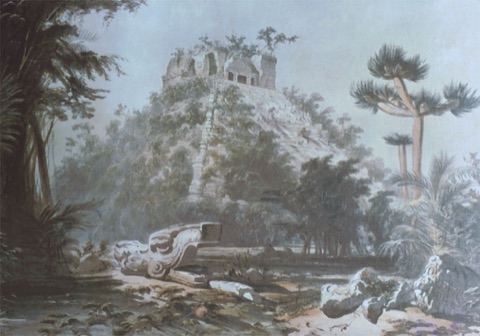
1843
John Lloyd Stephens and Frederick Catherwood
The writer and the artist published Incidents of Travel in Yucatan, with the first images of El Castillo to reach the rest of the world.
-
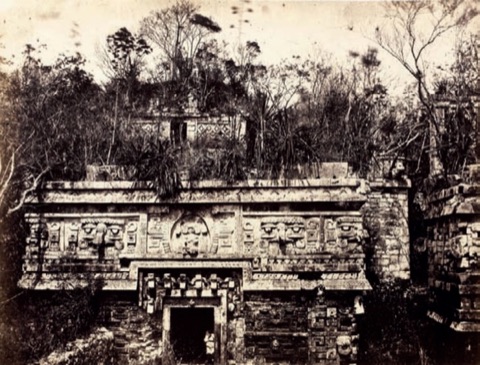
1860
Desire Charnay
The French photographer captured the Nunnery and the Red House on collodion glass plates, some of the earliest photos of the city.
-
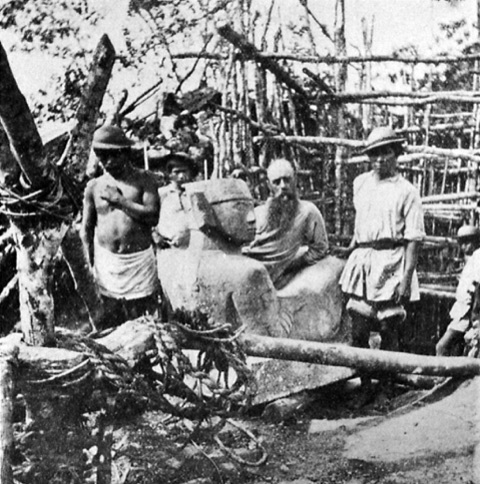
1875
Augustus and Alice Le Plongeon
The couple dug at the Platform of the Eagles and Jaguars and uncovered the reclining statue they named Chac Mool.
-
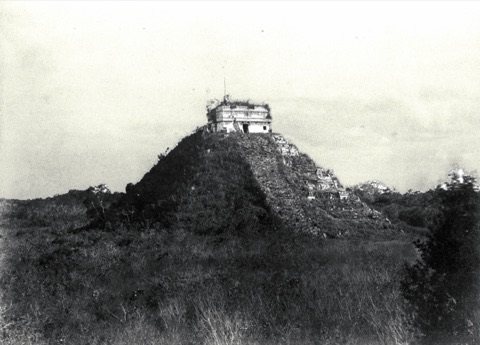
1892
Teobert Maler
The explorer photographed El Castillo still covered in plants, just as the first archaeologists found it.


Protecting Chichen Itza today
Today, Chichen Itza is a World Heritage Site, one of the New 7 Wonders of the World and one of the two most visited archaeological sites in Mexico. It is open 365 days a year.
Too many footsteps on the stone
In high season, it received up to 8,000 visitors a day, who climbed the monuments. The stairways wore down quickly, and many visitors left graffiti on the walls.
Why you can no longer climb
To slow the damage, INAH gradually closed access to the buildings and their inner chambers. El Castillo closed in 2006, after a visitor died in a fall from its stairway. Climbing the monuments is now banned for visitors' safety and to protect the structures, which can finally be seen at their best.
Who protects the site?
The restored core, about 5 km² (2 sq mi), is federal property, managed and protected by INAH, Mexico's National Institute of Anthropology and History. But the ancient city spread much farther, and many unexcavated ruins lie on land that cooperatives and private owners use for farming today.
The Gran Museo de Chichén Itzá
Since 2024, the site has had its own museum near Piste. It displays more than 1,000 pieces, from offerings recovered from the Sacred Cenote to objects found during the construction of the Tren Maya, and it is a good stop before or after the ruins.
Public-domain historical photographs and engravings via Wikimedia Commons: Frederick Catherwood (1843), Desire Charnay (1860), Augustus and Alice Le Plongeon (1875 and 1876) and Teobert Maler (1892).
Walk through 1,500 years of history with a guide
A certified guide takes you from Old Chichen to the Great Platform and tells you what isn't written in the stones, with your Chichen Itza ticket included.
See Chichen Itza toursFAQs
Chichen Itza history FAQs
When was Chichen Itza built?
Over about 700 years. The first settlements date from the 5th or 6th century, the Puuc buildings of Old Chichen from about 600 to 900 AD, and El Castillo and the Great Platform from about 900 to 1200 AD.
What is Chichen Itza?
Chichen Itza is a pre-Hispanic Mayan city in Yucatan, Mexico. It was a political capital and a sacred pilgrimage site, and today it is a UNESCO World Heritage Site and one of the most visited archaeological sites in Mexico.
What civilization was located on the Yucatan Peninsula?
The Maya. Their civilization grew in southern Mexico and Central America about 3,000 years ago, and after the 9th century, its center of power moved north to the Yucatan Peninsula, where Chichen Itza became the leading city.
Is Chichen Itza a wonder of the world?
Yes. In 2007, Chichen Itza was voted one of the New 7 Wonders of the World, along with sites such as Machu Picchu and the Great Wall of China.
What is the Gran Museo de Chichen Itza?
The site's museum opened in 2024 near Piste. It displays more than 1,000 pieces, including finds from the Sacred Cenote and from excavations made during the construction of the Tren Maya.